


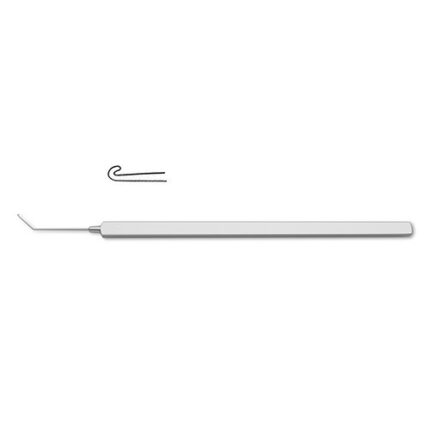
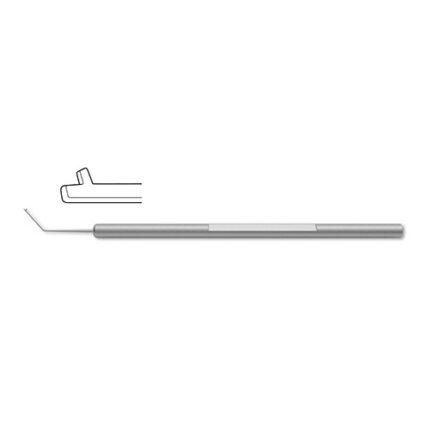
| Name | Hirschman Iris Hook |
| Lead Time | Lead time advised within 48 hours of order placement. |
| Competitor | ;OP2502;350349;350-349;601326;60-1326;E0549H;6013-26; |
| Specialty | Ophthalmology-Hooks & Manipulators |
| Material Finish | Stainless Steel |
| Grade | Premium Operating Room |
| Units of Measurement | Each |
| Manufacturer | JBS Industries |
| Sterility | Non-Sterile |
| Usage | Reusable |

Hirschman Iris Hook
0.75 mm hook, angled, 4-3/4″ (12.0 cm) Hirschman Iris Hook is a commonly used tool during cataract procedures and operations needing access to the lens capsule. The 0.75mm hook provides fine control while retracting only a selected portion of iris tissue. A blunted tip assures minimal tissue damage to the surrounding globe.
Description
Reviews (0)
Shipping & Delivery
Related products

Lewicky Lens Manipulating Hook
SKU:
JBS-5996
9.0 mm shaft, 90 degrees angled 2.0 mm tip, curved, 4-1/2" (11.5 cm) Lewicky Lens Manipulating Hook is a commonly used tool during cataract procedures. The hook is used to manipulate the opacified native lens during a phacoemulsification procedure. The extended length of the hook combined with the angled tip minimizes surgical obstruction during the procedure.

Koch Stop & Chop Manipulator
SKU:
JBS-6686
angled shaft w/ 1.5 mm tip, 4-1/3" (11.2 cm) Koch Stop & Chop Manipulator is a tool used exclusively for cataract procedures. The manipulator is used to facilitate the stop and chop technique, in which the lens nucleus is initially sculpted and then chopped into smaller pieces for extraction. The angled shaft aids in accessing the lens capsule.
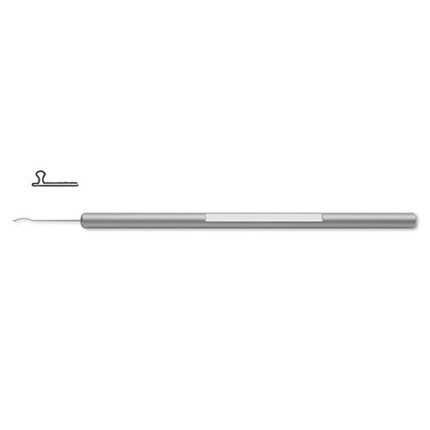
Maloney No-Hole Iol Manipulator
SKU:
JBS-4391
tear drop shape tip w/ post, 4-3/4" (12.0 cm) Maloney No-Hole IOL Manipulator is a useful tool for cataract procedures. The tear-drop shaped tip is ideal for manipulating the lens implant without risk of damaging or scratching. The extended working length allows the surgeon to maneuver the implant into the space desired.
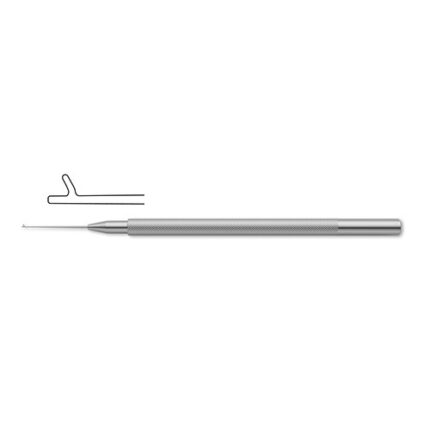
Maltzman-Fenzl Lens Manipulating Hook
SKU:
JBS-6847
0.15 mm v-shaped tip, 4-3/4" (12.0 cm) Maltzman-Fenzl Lens Manipulating Hook is a commonly used tool during cataract procedures. The hook is used to manipulate the opacified native lens during a phacoemulsification procedure. The tip contains 2 prongs designed to cup the lens in a variety of positions. Both angled and straight models are available with the hook depending on surgical preference.
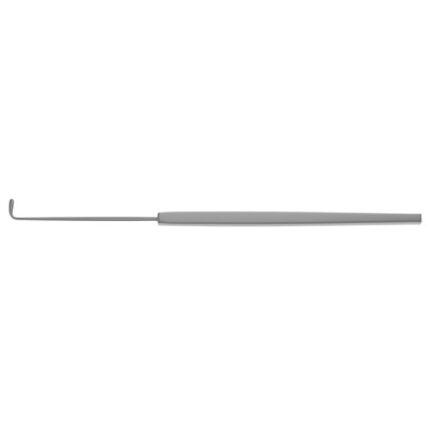
Gass Retinal Detachment Hook
SKU:
JBS-4963
5-3/4" (14.5 cm) Gass Retinal Detachment Hook is a multipurpose tool used for procedures involving the retina and extraoccular muscles. The rounded hook may be used to examine the delicate retinal tissue for manipulation following detachment. IN addition, the wide tip is handy for the lifting of extraocular muscles for the passing of sutures.

Jameson Muscle Hook
SKU:
JBS-7827
5-1/8" (13.0 cm) Jameson Muscle Hook is a useful tool in performing strabismus or other ophthalmologic procedures involving the ocular muscles. The hook can be used to elevate the muscle tissue for dissection and reattachment. The rounded tip ensures atraumatic entrance underneath the desired muscle. Two different sizes are available with the hook depending on surgical preference.

Harris-Sinskey Lens Manipulating Hook
SKU:
JBS-9497
0.25 mm diameter, blunt tip, angled Harris-Sinskey Lens Manipulating Hook is a useful tool in cataract procedures. The hook may be used to maneuver lens tissue in order to facilitate extraction of the opacified tissue. The smaller diameter hook affords the surgeon increased control during the procedure. In addition, the blunt tip ensures minimal tissue damage or posterior capsule tear.
Double Fixation Hook
SKU:
JBS-6798
5-1/4" (13.5 cm) Double Fixation Hook is a useful tool in ophthalmic and occuloplastic procedures. The instrument may be used to atraumatically fix the lid or other skin flaps for manipulation of deeper tissues. Two different hook widths are available depending on surgical preference and patient variation.

Reviews
There are no reviews yet.